How to Start a Freelance Business in the UK
Every day, people throughout the UK think about quitting the nine-to-five to make a living doing what they love.
Who doesn’t like the idea of choosing who you work with, when you work, and where you work?
Sounds awesome.
And it is.
But if you think running a freelance business is easy, think again.
You become a business owner – even if you are the only person in the business. And with that comes responsibility.
Somebody has to take care of marketing, sales, finance, customer service, admin, IT, systems and processes, compliance and so on. So you need to be multi-skilled, a fast learner, or prepared to get help.
But don’t panic. Thousands of people successfully make a living as freelancers, and you can too.
And you don’t need to know how to do everything all at once – most freelancers wing it a little bit in the early days.
That said, understanding the basics and knowing what to expect will help you move your business forward faster.
- Part 1: Business registration and company formation
- Part 2: How to get clients
- Part 3: Building a successful (and profitable) business
Part 1: Business registration and company formation
It’s actually much easier to start a freelance business than you might think. You go out and get your first client, and boom – you’re in business.
You don’t have to be incorporated. You don’t have to have a business name or a website, and you don’t even have to register as self-employed straight away.
You can just start.
But, at some point, you do need to register with HMRC. And you will need to consider how you operate as a business, and how to market yourself.
Sole Trader
A sole trader is a single individual who runs their own business and works for themselves. That means they make all the decisions, have all the liability, cover all the costs and keep any profits. Being a sole trader doesn’t necessarily mean there is only one person in the business – a sole trader can hire employees.
To start trading as a sole trader, you simply need to register as self-employed with HMRC.
You do not have to do this immediately, but you must register if you have earned more than £1,000 in the previous tax year. You must register before 5th October in the business’s second tax year, or you could face a fine.
Once registered, you must complete a self-assessment tax return after every tax year. The UK tax year runs from 6th April to 5th April.
Limited Company
A limited company can be formed by one or more people who will be the named directors. The company is its own legal entity, and the business finances and assets are separate from personal finances and assets. Limited companies are registered at Companies House.
Forming a limited company is not difficult, but it involves slightly more administrative work and a very small cost (currently £50).
You need to register the company with Companies House. This is quite straightforward, and you can do it yourself. Alternatively, numerous third-party companies or accountants will help you do it for a small admin fee.
You will need to choose a business name, name the directors, and allocate shares. You will also need a registered address. If you don’t have an office address, you can use your home address. Alternatively, you can pay to use a registered address service.
Once your company is registered, you will receive a certificate of incorporation showing your unique company number and the date of incorporation.
You can register a limited company here.
Limited Company Vs Sole Trader: What’s the difference?
I started freelancing as a sole trader and later switched to a limited company.
There are advantages and disadvantages to both, and what’s right for one person may not be right for another.
You’ll need to decide what’s best for your business. The good news is it's possible to switch if you need to (although this isn’t something you should do regularly).
I've written a more in-dpeth article about the key differences between sole trader and Limited Company here:
 Lisa Slater
It covers
- Company names and trading names
- Privacy
- Liability
- Paying yourself and paying tax
- Annual account
- Bank accounts
- Credibility
VAT registration
Regardless of whether you are a sole trader or a limited company, you must become VAT registered if you exceed the VAT taxable turnover.
It is possible to register for VAT before you exceed the threshold, and many companies decide to become VAT registered even if they don’t have to.
An accountant can help you decide if this is the right route for your business.
Employing staff
You can employ staff regardless of whether you are a sole trader or a limited company.
Whatever type of company you are, you must meet all the legal requirements regarding tax, NIC and pensions. You will have to set up a PAYE scheme to ensure that you meet these requirements – many companies outsource this to an accountant or bookkeeper.
Summary: Sole Trader vs Limited Company
- Setting up as a sole trader is quicker and easier than forming a limited company
- Your trading name is not protected as a sole trader
- Your name, business address and some financial information will be more accessible if you register as a limited company
- Sole traders are personally liable for any debt or legal actions against their business
- Limited companies may be more tax efficient
- Limited companies must file annual company accounts and pay corporation tax
- Limited companies can sometimes be perceived as more credible than sole traders
Part 2: Getting your first clients
Many people think you need to make decisions about company name, company structure, and when to register as self-employed before you start trading as a freelancer.
You don’t.
I covered all those things first because they will be important at some point, and it is useful to know your options and obligations.
But none of those things will be relevant if you aren’t making any money. And to make money, you need clients.
So don’t procrastinate over the details – who to bank with, what colour logo to have, or how to choose an accountant. You can do these things once you’re up and running.
I see too many people waiting until they have the “perfect” business before they launch.
Firstly, there’s no such thing as perfect. Even if you think you’ve nailed down what you want your business to look like, chances are it’ll look completely different a year from now.
Secondly, it doesn’t matter how “perfect” your business is before you launch. If you launch and nobody buys, you haven’t got a business.
So if you are serious about working for yourself, make getting clients your number one priority.
Tap into existing connections
Who do you know who would benefit from your products or services? Who could your friends or colleagues introduce you to? Are there any organisations or charities you’re involved in that need what you offer?
If you’re starting completely from scratch, you could offer to work for free or at a discounted rate in exchange for a review. This can help you build your portfolio.
I wouldn’t recommend doing more than one or two projects for free. I did two free copywriting projects when I first started – one for a marketing agency (that subsequently passed me a lot of paid work) and one for a charity.
If you are going to offer free or discounted work to build your portfolio, be selective about who you offer your services to and be clear on what’s included. Don’t let people take advantage.
Network
Networking can be a great way to build connections and start conversations with people who need your products or services.
I met my first client at a networking event in 2014, and we're still in touch now.
If you’re new to networking, it can be nerve-wracking, but trust me, half the people there will be just as nervous as you.
The key to networking is to go with an open mind. Don’t go with the objective of trying to sell to everyone you speak to. Go with the objective of building new connections.
You might meet a potential client at your first event, but you probably won’t. That doesn’t mean it’s a failure. There will be people there who could turn into clients later down the line. Or there might be people who can introduce you to potential clients. Or there might be people you can learn from or get support from.
Be interested in other people. Contribute to conversations. Give people a great impression so they remember you.
Cold outreach
Most freelancers I know cringe at the idea of cold calling – especially if they have no sales experience.
And it’s understandable. You have to have a thick skin when cold-calling because there’s a good chance you’ll get a lot of rejections.
But calling isn’t the only option for cold outreach. You can reach out to people via email, direct mail, or social media messages.
The key to cold outreach is quality over quantity. While it might seem like a good strategy to send a generic message to as many people as possible, you’ll get better results if you opt for a more laser-focused approach.
Do some research and find people or companies that you genuinely want to do business with and that are likely to need or want your services. Once you have your list, spend time creating personalised messages showing them you understand their business and demonstrating how you would add value.
Freelancer sites or job boards
There are a whole host of freelancer sites – Upwork, Fiverr, PeoplePerHour, Freelancer, Simply Hired, Task Rabbit and many more.
Many freelancers use sites like these to find work and build a portfolio when they’re starting out.
Each site works slightly differently, and some are more suited to certain specialisms or industries.
On some sites, you can bid on projects or apply for jobs. On others, you can post your services, and people can message you if they are interested.
While these sites can be a great way to find work in the early days, there are some disadvantages.
Some sites are highly competitive with freelancers from all over the world. This means some projects are extremely low-paying, and you can get outbid by someone offering ridiculously low rates.
Personally, I have never used freelancer sites to find clients, but I know some freelancers who use job sites as their main source of work.
Do a bit of research and find the sites that are best suited to your area of expertise.
Social media
Social media is a popular marketing tool for most businesses, as you can set up a free profile on most social media platforms.
And there’s a whole host to choose from – LinkedIn, Facebook, Instagram, Tik Tok and so on.
The obvious place to start advertising your services as a freelancer is on platforms where you already have a following. But if your following only includes friends and family, you probably won’t get masses of enquiries. That’s when you need to start building your audience and connecting with people who may be in the market for what you offer.
Depending on which platform you choose, you might want to set up a separate business account as well. You can still post from your personal account, but direct people to your business page so you can start building it up.
Paid advertising
Ideally, you don’t want to spend a load of money before you’ve got any clients, but if you can get the right ad in the right place for a good price, it could pay off.
And there are a whole load of places you can advertise:
- Google ads
- Social media ads
- Sponsored links
- Paid reviews
- Online directories
- Newspaper ads
- Magazine ads
- Flyers
- Door drops
- Billboards
- Posters
- Radio
The key to paid ads is ensuring you are getting in front of the right audience, not just the biggest audience.
For example, you wouldn’t put an ad for baking equipment in a gardening magazine just because it sold more copies than a baking magazine.
If you offer cleaning services, putting flyers through doors in the areas you cover would probably get a better response than Google ads, even though millions of people use Google every day.
If you have got an advertising budget, use it wisely. Don’t just stick your adverts everywhere you can think of – be selective.
Website (or third-party website)
One of the common mistakes I see new freelancers make is rushing to build a website. While I am a huge advocate of having a website, it shouldn’t be your first priority.
If you are selling a product, having a website where people can order it makes sense. That said, starting with a third-party site, such as Amazon, eBay, or Etsy, might be more beneficial. Those sites already get visitors, whereas if you create a brand new site, you’ll need a strategy for getting people to it.
Using a third-party site can also help you test the market, your product and your pricing before you invest huge amounts of money into your business.
If you’re offering a service – copywriting, accountancy, VA services etc. – then you don’t need a website to get started.
Yes – a website is a good investment long-term. But in the early days, when you’re still figuring out how to package your services, who you want to work with, and what you want your business to look and sound like, you don’t need one.
Trust me when I say your business will change and evolve a lot in the first few months. And you don’t want to invest hours of time or huge amounts of money into a website that needs changing and updating every five minutes.
So focus on getting a handful of clients and then set up a website.
And don’t feel you need to spend thousands of pounds on your first site. Think of a website like a house – you don’t have to stay in the first one you buy forever.
Longer-term strategies
Most of the strategies we’ve covered above can generate results quickly, which is what you need when you’re starting out.
But once you have a bit of traction, you might want to invest in some longer-term marketing activities, such as content marketing.
I’m not going to go into depth in this article about how to grow your social media following, build an email list, or develop a content marketing strategy. These things aren’t a priority to begin with, but they are things you might want to consider later down the line.
Part 3: Managing your freelance business (and making it a success)
Anyone can register a company with Companies House and call themselves a director. Anyone can help a mate out for a few quid and call themselves a freelancer.
The hard part isn’t starting a business. The hard part is making it successful, profitable, and sustainable.
And that’s what we’re going to look at now – how to be a successful freelancer.
Marketing and sales
You don’t have a business if you aren’t making money, and to make money, you have to sell.
Getting your first few clients is only step one. Even if you manage to fill your week with retainer clients from the start, those clients could end their contracts at any time. And if one of those clients makes up 70% of your income, that will be a huge hit to your business.
So you always need to be marketing, even if it’s just posting on social media a few times a week to stay visible.
And if you don’t have retainer clients – if you need a constant stream of enquiries – then you need to invest in your sales and marketing skills (or pay someone to take care of it for you).
Clients will not appear at your door just because you started a business. It doesn’t matter how good you are at what you offer – you still need to convince people to buy from you.
Self-motivation and time management
One of the biggest draws of freelancing is flexibility. You can pick and choose when and where you work.
But that can also be a downside because you don’t have anyone managing you. You don’t have anyone pushing you to do the work. You don’t have anyone holding you accountable.
So you have to hold yourself accountable. Because there is work to do, and you have to do it.
You have clients who are trusting you to deliver on your promises.
And you have a business to run – there will be marketing, admin and business development tasks that need your attention, so time management is key.
When you don’t have much work on, it’s easy to procrastinate – you have plenty of time. You can work on it tomorrow.
Then there’s the opposite end of the scale – you take on too much work or agree to unrealistic timescales, and then you struggle to meet deadlines.
And when you overload yourself with work, you don’t have time to market yourself, take care of those admin tasks, or pay attention to your cash flow.
Learning to manage your time and being able to self-motivate are essential. You have to be realistic about how much work you can manage. And you have to be disciplined. You have to do the work even when you don’t feel like it. If you let those clients down, they won’t come back, and they won’t recommend you.
And if you neglect your marketing when you’re busy, you’ll end up trapped in a feast and famine cycle.
And if you don’t make time for admin, you might make a costly mistake. Forgetting to send an invoice. Missing an important client email and losing their business. Overlooking an enquiry that would have been an amazing opportunity.
So learn how to manage your time.
Looking after yourself
As a freelancer, you are your business. Without you, it doesn’t work.
And that means you have to look after yourself.
If you’re miserable, stressed, anxious, tired, overworked, not eating properly, worried about money or ill, you can’t give your clients the great service they deserve.
So take care of yourself.
Make time for exercise. Take time off. Do things you enjoy. Say no to stuff you don’t want to do. Get rid of clients who make you feel like crap.
It’s your business, your terms.
Money management
It never fails to surprise me how many freelancers have no control over their money.
They live invoice to invoice, spending the money as it comes in, regardless of whether they’ve had a good or bad billing month.
If you don’t have control of your money, you don’t have control of your business. You’ll always be relying on that next sale, which isn’t a good position to be in.
You don’t want to be desperate for sales. You don’t want to have to take on projects or clients you don’t like. You don’t want to feel pressured into discounting your rates because you urgently need cash to pay your mortgage.
So you need to understand your figures.
You need your pricing to be right. You need your payment terms to be strict. And you need to manage your money sensibly.
I pay myself the same every month regardless of how much profit I’ve made. When I have a better-than-average billing month, I leave the money in my business so that when I have a lower-than-average month, I can still cover my costs.
Having separate bank accounts for business and personal makes it easier to manage your money.
Get off to a flying start
Want to attract great clients for your freelance business and get off to a flying start? I can help.
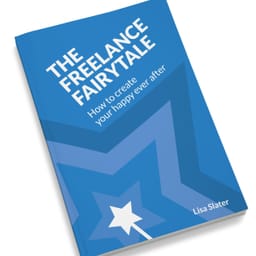
My book – The Freelance Fairytale – is packed full of practical advice for freelancers who want a business that makes them happy.
Or if you’d prefer something more bespoke, book yourself 90 minutes with me. We can use the time to plan your marketing, figure out how to package your services, and ensure you don’t make some of the most common freelance mistakes.